
Bail Hearings in Quebec: What to Expect After Being Charged
Bail Hearings in Quebec: What to Expect After Being Charged

Being arrested in Quebec is often overwhelming. After charges are laid, one of the first and most important steps is the bail hearing, sometimes called a show cause hearing. This is where a judge decides whether you will be released until trial or kept in custody. The outcome can shape the entire defence strategy and have a major impact on your daily life.
What Is a Show Cause Hearing?
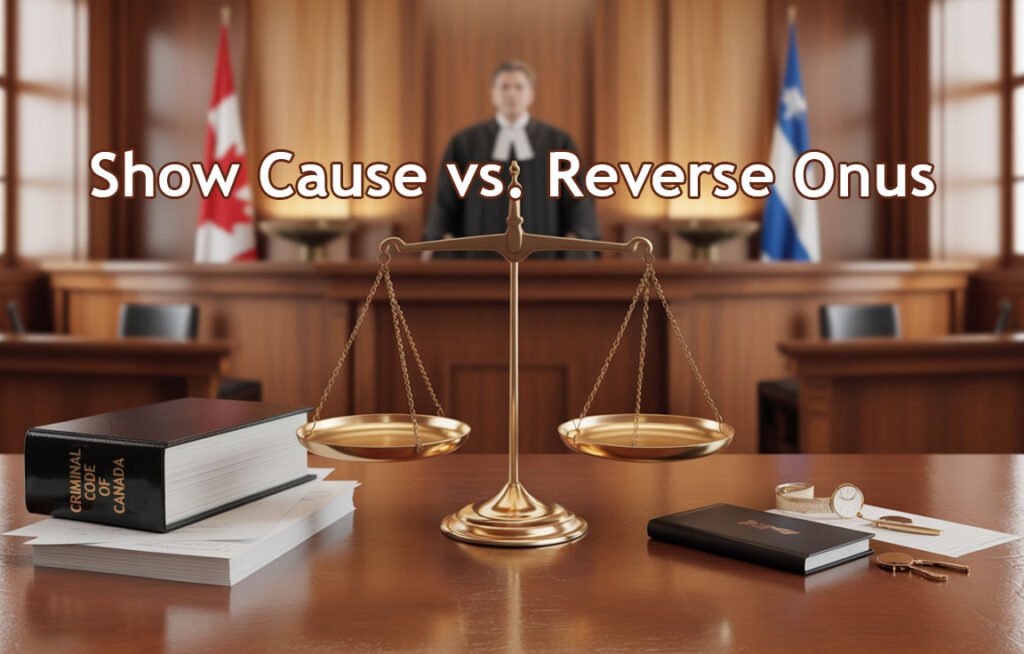
A show cause hearing is the legal proceeding where the court examines whether an accused should remain in detention or be released with conditions.
- In most cases, the Crown prosecutor must show cause meaning they must prove why detention is justified.
- In certain cases, however, the burden shifts. This is called reverse onus. It applies, for example, if the accused is already on bail for another offence, if firearms are involved, or in certain serious offences. In these cases, the accused must prove why they should be released.
How Judges Decide on Bail
Quebec courts, applying the Canadian Criminal Code, assess three main grounds:
| Ground | What the Judge Considers |
| Primary Ground | Will the accused attend all court dates? Risk of flight is central here. |
| Secondary Ground | Will releasing the accused endanger public safety or risk interference with victims or witnesses? |
| Tertiary Ground | Would release undermine confidence in the justice system, especially in serious or high-profile cases? |
Other factors include the seriousness of the offence, past criminal record, ties to the community, family responsibilities, and employment.
Conditions of Release: Sureties and Recognizance
If release is granted, it usually comes with conditions. These may include:
- Recognizance or undertaking: a signed promise to appear in court and follow the rules.
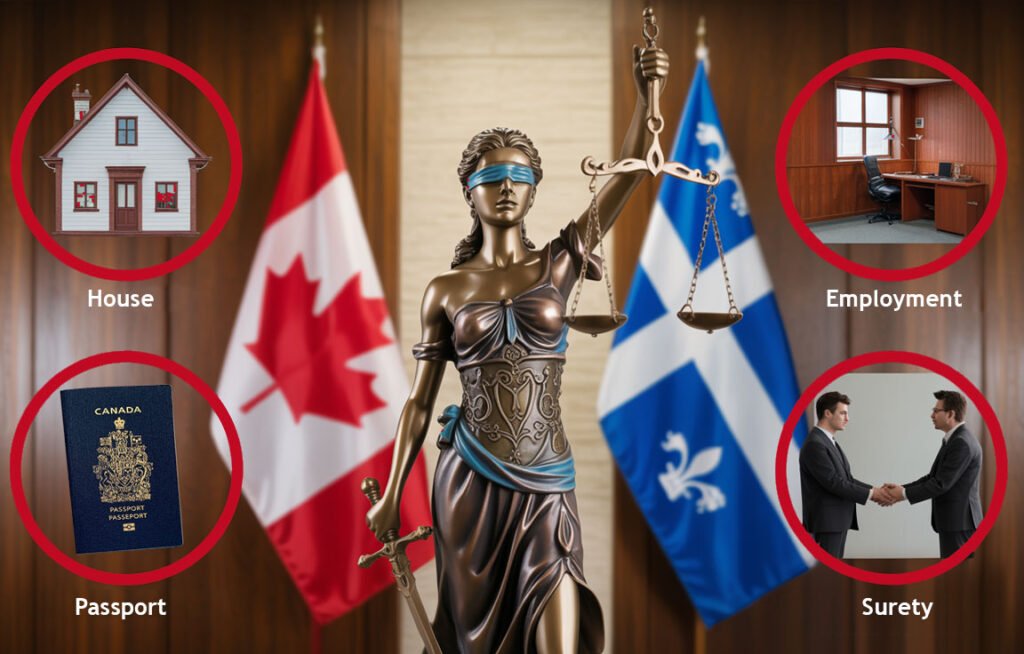
- Surety: a responsible person (often a family member or close friend) who supervises the accused and may pledge money to guarantee compliance.
- Typical conditions:
• No contact with victims or witnesses.
• No possession of weapons or drugs.
• Restrictions on movement, such as staying away from certain places or people.
• Curfews or house arrest.
• Regular reporting to police.
• Passport surrender or travel restrictions.
The guiding principle is that the court must impose the least restrictive conditions necessary to address the risks.
The Role of a Lawyer at a Bail Hearing
Having an experienced lawyer at a bail hearing is critical. While the hearing itself may only last a few hours, the preparation and strategy behind it often decide the outcome. Here is how a defence lawyer makes the difference at every stage:
1. Early advice and preparation
A lawyer’s involvement should begin immediately after arrest.
- Explaining the charges and possible outcomes helps the accused make informed decisions and reduces anxiety in the first hours of detention.
- Reviewing the disclosure from the Crown allows the lawyer to anticipate what arguments will be raised in court.
- Preparing supporting documents such as proof of residence, employment letters, and medical records creates a foundation for a strong release plan.
2. Building a strong release plan
Courts need reassurance that releasing the accused will not create risk. A lawyer develops a credible plan to address those concerns.
- Identifying a suitable surety who is trustworthy and financially responsible. Judges often scrutinize the surety’s background, so careful selection matters.
- Demonstrating community ties: stable housing, long-term employment, education, and family responsibilities are all evidence that the accused will not abscond.
- Collecting supporting letters from employers, community leaders, or counselors adds credibility. A lawyer ensures these documents are properly drafted and persuasive.
3. Challenging the Crown’s case
A bail hearing is not a mini-trial, but it does involve testing the Crown’s assertions.
- Lawyers can question whether the risk of reoffending is exaggerated or unsupported by evidence.
- They can argue that strict conditions (such as a curfew or no-contact orders) effectively manage risks without requiring detention.
- By cross-examining police witnesses when necessary, lawyers highlight weaknesses or inconsistencies that may undermine the Crown’s request for detention.
4. Handling reverse onus cases
In situations where the burden of proof shifts to the accused, preparation is even more vital.
- Lawyers gather additional evidence showing that release is safe and appropriate. This might include treatment plans for addiction, counselling reports, or character references.
- They build a narrative that explains why the accused poses minimal risk despite the seriousness of the charge.
5. Reviews and appeals
Not every bail hearing ends with release, but a denial is not the end of the process.
- Defence lawyers can apply for a bail review before the Superior Court if there was a legal error, if new evidence has emerged, or if circumstances have changed.
- They can also appeal to higher courts to correct unjust or unreasonable decisions.
- Even after bail is granted, lawyers can apply to vary conditions that are too restrictive, ensuring the accused can work, study, or support family while awaiting trial.
Lawyer’s insight: Bail hearings are often won or lost on preparation rather than persuasion. A well-structured release plan supported by evidence and credible sureties can outweigh even serious charges. Conversely, a weak or rushed plan almost always results in detention.
Practical Examples
- Case where bail was denied: An accused charged with armed robbery while already on bail for another offence was kept in detention. The court emphasized both the secondary and tertiary grounds of public safety and maintaining confidence in justice.
- Case where bail was granted: An accused facing drug trafficking charges was released because a strong surety came forward, a curfew was imposed, and strict reporting conditions were agreed to. The court found the risks were managed.
Common Questions About Bail in Quebec
Do all accused get a bail hearing?
Almost every accused person has the right to a bail hearing. The main exception is when the police release the person directly with an undertaking and conditions, which is often done for less serious offences. If the offence is more serious, or if police believe detention is necessary, the accused must appear before a judge or justice of the peace. In practice, bail hearings are a safeguard that prevents people from being held indefinitely without judicial oversight.
How long after arrest does the hearing take place?
The law requires that an accused be brought before a judge as quickly as possible, generally within 24 hours of arrest. In busy urban centres like Montreal, hearings usually happen the next business day. In remote areas, delays can be slightly longer, but courts are strict about avoiding unnecessary detention. A delay without proper justification may even lead to a breach of Charter rights.
Can bail conditions be changed later?
Yes. Bail conditions are not fixed forever. Either the defence or the Crown can apply to the court to vary conditions if circumstances change. For example, an accused might request permission to travel for work, to adjust a curfew, or to contact a family member if contact restrictions have become unworkable. The court will re-examine the risks and may relax or tighten the conditions. Having a lawyer prepare the request with supporting documents increases the chance of success.
What happens if bail conditions are breached?
Breaching bail conditions is a serious matter. Police can arrest the accused immediately, and the Crown can lay a new criminal charge for failure to comply with a court order. In addition, any financial pledges or surety undertakings may be forfeited. A breach also makes it harder to obtain bail in future cases judges look closely at whether a person respected previous conditions. Sometimes even a minor breach, such as missing a curfew by an hour, can jeopardize release status.
Can bail be denied permanently?
If bail is denied, the accused remains in custody, but the decision is not necessarily final. The defence can bring a bail review application in Superior Court or appeal the decision. New evidence, changes in circumstances, or legal errors at the initial hearing can all justify a review.
Does the seriousness of the charge always mean detention?
Not always. Even for serious charges like drug trafficking or assault, a strong release plan with a responsible surety and strict conditions can persuade a judge that the accused can be safely released. Conversely, even minor charges may lead to detention if the accused has a long history of failing to appear in court.
Conclusion: Be Prepared, Protect Your Rights
Bail hearings in Quebec are fast-moving and decisive. They can determine whether you wait for trial at home or in custody. Preparation is everything: a solid release plan, reliable sureties, and clear evidence of stability make the difference.
At Guzun & Associates, we represent clients across Montreal and Quebec in bail hearings with strategy, urgency, and clarity.
📞 Call us at +1 (514) 842-7414
📧 Email us at office@avocatguzun.com
📍 Meet us in our Old Montreal office or schedule a secure online consultation
With the right legal guidance, you can protect your freedom and ensure your defence begins on solid ground.