
Drug Crime Lawyer in Quebec: What to Do If You’re Charged
Drug Crime Lawyer in Quebec: What to Do If You’re Charged

Being charged with a drug offence in Quebec can affect every part of your life – from your job and travel plans to your immigration status. Even simple drug possession f a small amount of a controlled substance can lead to a criminal record that follows you for years.
Drug offences are mainly governed by the Controlled Drugs and Substances Act (CDSA), but Quebec’s provincial courts handle prosecutions with unique procedures and policies. Cannabis-related offences are treated separately under the Cannabis Act, which the province enforces more strictly, especially when it comes to age (21+), possession limits, and public consumption.
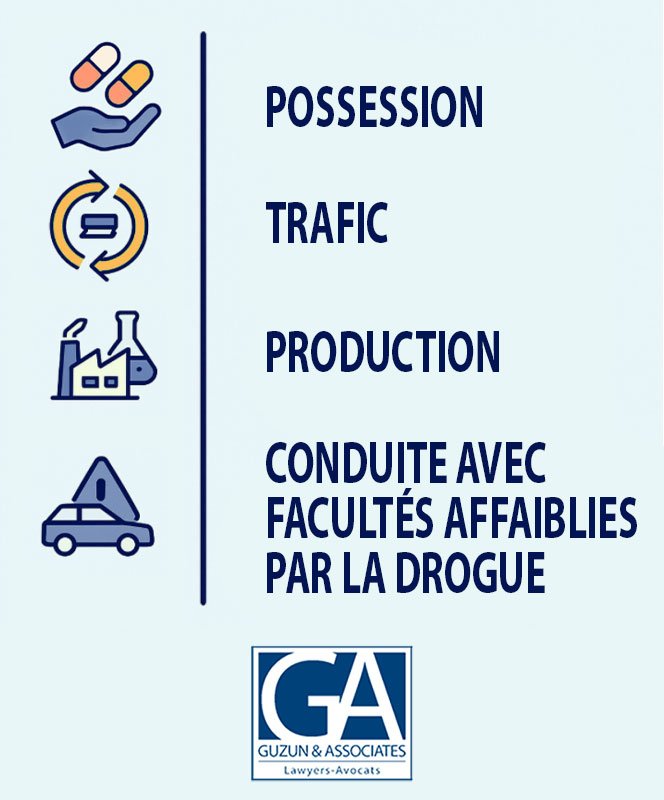
Whether the allegation involves possession, trafficking, production, or drug-impaired driving, working with an experienced criminal defence lawyer can mean the difference between a conviction and a reduced or dismissed charge.
Understanding Quebec’s Drug Laws: Federal vs. Provincial Rules
The Federal–Provincial Overlap
Drug crimes in Quebec fall under federal law, but they are prosecuted in provincial courts. This means that a lawyer must understand both systems: federal statutes like the CDSA and local procedural rules, which influence how cases are managed, what evidence is admissible, and which diversion programs are available.
Controlled Drugs and Schedules Under CDSA
The CDSA divides substances into five schedules. The higher the schedule, the more severe the penalty:
- Schedule I: Heroin, cocaine, fentanyl, methamphetamine (up to life for trafficking).
- Schedule II: Cannabis and related derivatives (now primarily under Cannabis Act for recreational use).
- Schedule III–V: Psychedelics (e.g., LSD), anabolic steroids, prescription drugs (e.g., benzodiazepines in IV; minor preparations like cough syrup in V) used illegally.
Different schedules determine how serious a charge is and whether jail is possible.
Common Drug Offences in Quebec: Penalties and Examples
| Type of Offence | Description | Potential Penalties |
| Simple possession | Having a controlled substance for personal use (e.g., cocaine, methamphetamine, fentanyl). | Fine up to $1,000 + 6 months jail (first offence); indictable: up to 7 years. Depends on drug, amount, record |
| Possession for the purpose of trafficking | Possessing drugs with intent to sell (signs of sale – packaging, scales, cash evidence, messages). | Indictable offence; up to 14 years. Sentencing varies by role and aggravating factors. Most mandatory minimums were repealed in 2022. |
| Trafficking / distribution | Selling, giving away, or transporting controlled substances. | One of the most serious drug crimes. Up to life imprisonment; fines/seizures. |
| Production / cultivation | Growing or manufacturing controlled substances without a licence (e.g., cannabis plants). | Indictable offence. Penalties depend on the drug and production scale (up to 14 years for large-scale). |
| Drug-impaired driving | Operating a vehicle while impaired by drugs. | Criminal Code offence with fines ($1,000+), 12-month license suspension (Quebec SAAQ), jail for repeats/accidents. |
Note on Cannabis in Quebec
Although recreational cannabis is legal federally in Canada, Quebec applies stricter rules:
- Minimum age: 21 years.
- Public consumption: Banned (including sidewalks, parks).
- Possession: Max 30g in public; 150g dried cannabis per household at home.
- Home growing: Prohibited
- Selling/sharing without license or to minors: Criminal offence with fines up to $1,000 or jail.
Violating these rules can still lead to fines or criminal charges, especially if minors are involved.
How Drug Charges Move Through Quebec Courts
Step 1: Arrest and Investigation
Police must have reasonable grounds before searching or arresting you. If they violate your Charter rights, your lawyer can challenge the evidence and request its exclusion.
Step 2: Disclosure and Evidence Review
Once charged, the Crown must share all evidence, including lab results, surveillance, and witness statements. A strong defence begins with analyzing every detail for errors or inconsistencies.
Step 3: Negotiation and Resolution
Before trial, your lawyer can negotiate for:
- A withdrawal of charges
- A reduced charge (for example, trafficking reduced to possession)
- A non-criminal outcome, such as diversion or discharge
Step 4: Trial
If negotiations fail, the case moves to trial. The Crown must prove guilt beyond a reasonable doubt. The defence can challenge:
- Search and seizure legality
- Proof of possession or intent
- Continuity and reliability of drug testing
- Police procedures or misconduct
Key Defence Strategies Used by Drug-Crime Lawyers
1. Challenging Unlawful Searches and Arrests
Evidence obtained through illegal searches may be ruled inadmissible, weakening the prosecution’s case.
2. Contesting Knowledge and Intent
You can’t be convicted unless the Crown proves you knew about the drug and intended to possess or distribute it.
3. Questioning Lab Testing and Chain of Custody
Breaks in evidence handling, contamination, or faulty testing can undermine the prosecution’s proof.
4. Arguing Entrapment or Police Misconduct
If police induced the offence or exceeded their authority, charges can be stayed.
5. Seeking Alternative Resolutions
For minor cases, your lawyer can argue for rehabilitation, counselling, or treatment programs to avoid jail or a criminal record.
Additional Considerations in Quebec Drug Cases
Drug-Impaired Driving (DUI)
This is prosecuted under the Criminal Code rather than the CDSA. Penalties include:
- Minimum $1,000 fine and one-year driving licence suspension for a first offence
- Jail time, longer bans for repeat offenders
- Increased penalties when accidents cause injury or death
Blood and saliva tests must be conducted lawfully; otherwise, results can be challenged.
Youth Offenders in Drug Cases
Under the Youth Criminal Justice Act (YCJA), minors accused of drug offences face a different process that prioritizes rehabilitation over punishment. A drug-crime lawyer can help negotiate educational or counselling-based alternatives.
Professional and Immigration Consequences
Even minor convictions can impact:
- Employment in licensed professions (law, medicine, education)
- Visa and residency status for non-citizens
- Travel to the U.S., where drug convictions can result in permanent bans
What to Do Immediately After Being Charged
- Do not discuss the case online or with friends.
- Refuse searches unless legally compelled and witnessed.
- Document everything, including police interactions.
- Request disclosure through your lawyer quickly.
- Comply with bail conditions to avoid additional charges.
- Contact a defence lawyer immediately to begin strategic planning.
How Guzun & Associates Can Help
At Guzun & Associates Lawyers, we represent clients in Montreal and across Quebec, with a focus on criminal defence and constitutional rights.
We Defend:
- Possession and trafficking offences
- Drug-impaired driving (DUI/DWI)
- Youth and student cases
- Illegal search and seizure claims
- Record suspension and expungement applications
What You Can Expect:
- A detailed strategy built around your evidence and goals
- Aggressive defence in provincial and superior courts
- Ongoing communication and transparency throughout your case
- Negotiation for withdrawals, reduced charges, or non-criminal outcomes
Frequently Asked Questions
Can I go to jail for simple possession?
Yes. It depends on the substance, quantity, and criminal history. First-time offenders often qualify for counselling or discharge programs.
Is cannabis still criminalized in Quebec?
Yes, if it involves selling, sharing with minors, or exceeding possession limits. Quebec has a minimum age of 21.
Can police search my home or vehicle without a warrant?
Only with lawful grounds or in emergencies. Illegal searches can result in evidence exclusion.
What are the penalties for drug-impaired driving?
They range from fines and suspensions to imprisonment for repeat or injury-related cases.
Can I avoid a criminal record?
In many cases, yes. Diversion, conditional discharges, and plea agreements can prevent a lasting record.
Contact a Drug-Crime Lawyer in Montreal
If you’re facing a drug-related charge, take immediate action. Early legal advice can prevent irreversible consequences.
Guzun & Associates Lawyers provide representation across Montreal and throughout Quebec.
Call: +1 (514) 842-7414
Email: office@avocatguzun.com
Visit: 105-1 rue McGill, Suite 15B, Montréal, Québec