
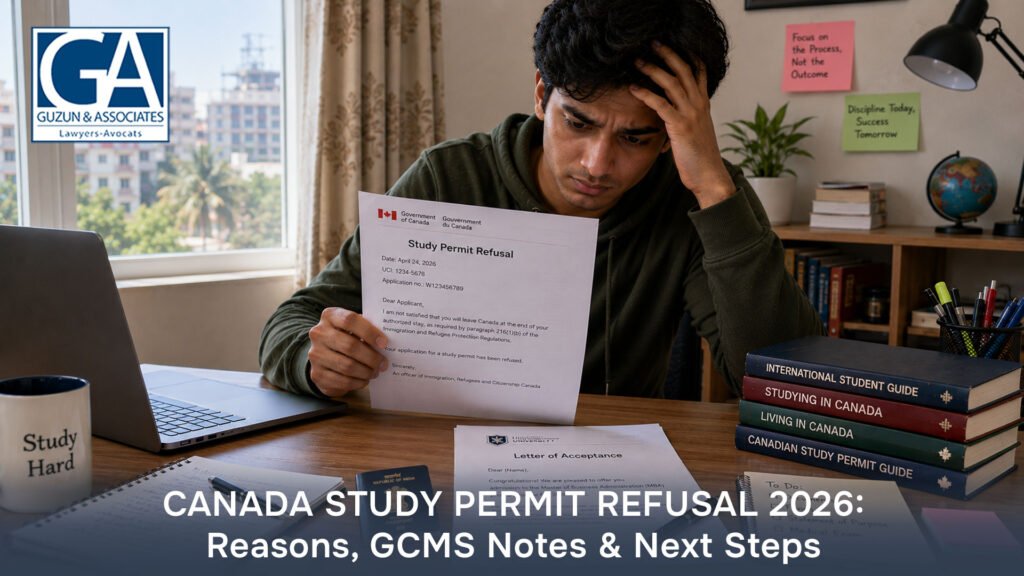
A study permit refusal can be discouraging, as it halts months of planning, tuition payments, and relocation efforts. In 2026, many applicants still receive brief, general reasons, making it hard to pinpoint the exact issues.
However, a refusal is not always the end of your Canadian study plans. Reviewing the decision, obtaining GCMS notes, addressing weaknesses, and then deciding to reapply or seek judicial review are common next steps.
Understanding Canada study permit denial in 2026
Canada continues to attract numerous international students in 2026, and IRCC officers assess each application for credibility, finances, purpose of travel, and adherence to regulations under the Immigration and Refugee Protection Act. A refusal occurs when the officer is not satisfied that the applicant meets the requirements of the Immigration and Refugee Protection Act and Regulations, including the requirement to comply with study permit conditions.
Refusal letters often use standard language. They might cite financial concerns, unclear travel purposes, insufficient ties to home, travel history issues, or doubts about departure after studies. These general reasons are merely a starting point for deeper analysis.
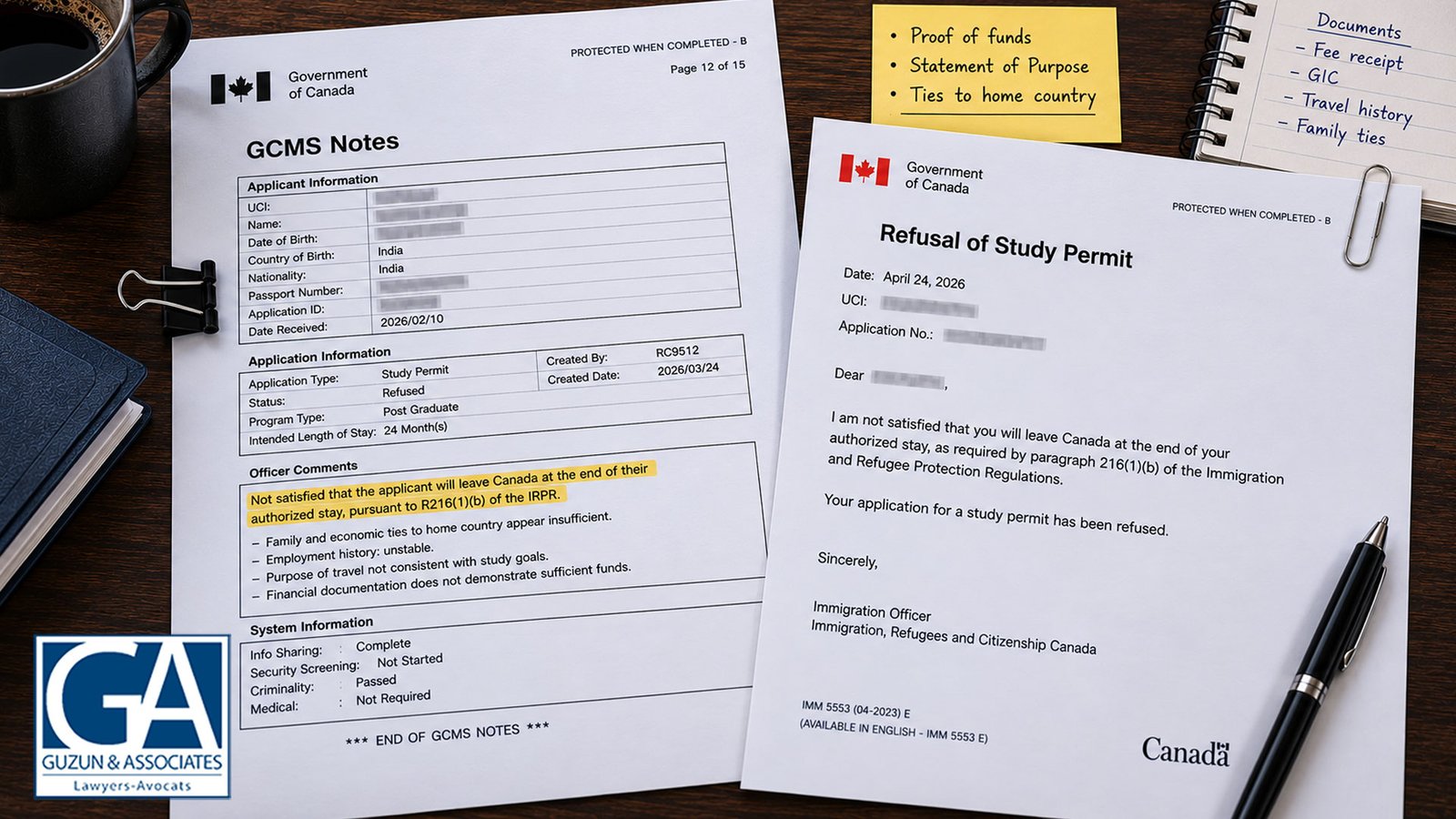
Common refusal reasons
- Insufficient proof of funds for tuition, living costs, and travel
- Weak explanation of the program choice
- Gap in studies without a clear explanation
- Mismatch between past education, work history, and chosen course
- Concerns about returning home after studies
- Missing documents or inconsistent information
2026 practical signs of a weak file
Under the strict international student caps enforced by IRCC in 2026, applications are scrutinized more rigorously than ever. Officers look for sudden large bank deposits, unclear sponsor support, or generic statements of purpose. Furthermore, they closely examine academic progression and the logical fit of the chosen program for your background.
The Quebec CAQ Factor: If you are applying to study in Quebec, you usually still need a CAQ, and Quebec-related study permit files may also need to satisfy the federal PAL/TAL framework unless an exemption applies. Because the 2026 rules include specific exemptions and categories, applicants should verify the exact document requirements for their level of study and institution before filing.
Applying with an expired CAQ or inconsistent Quebec-study documents can lead to delays, returns, or refusal, depending on the facts and the completeness of the file.
| Refusal issue | What the officer may think | Best response |
| Funds not convincing | Money may not be genuinely available | Add source proof, tax records, sponsor documents |
| Program choice unclear | Studies may not be the real purpose | Explain career plan and course relevance |
| Ties to home country weak | Applicant may not leave Canada | Show employment, family, property, obligations |
GCMS Notes: The Key to Understanding Your Refusal
GCMS notes are internal records from Immigration, Refugees and Citizenship Canada that often detail the officer's comments and reasoning behind a study permit refusal. After a refusal, they are extremely helpful: while the refusal letter can be vague, the notes clarify the specific concerns, preventing repetition of the same application errors.
As of 2025, IRCC may also include Officer Decision Notes with certain refusal letters, which provide a shorter explanation of the officer’s reasoning; GCMS notes remain a more detailed record that can still be requested separately through ATIP.

Why GCMS notes matter
The notes can reveal concerns not evident in the refusal letter. For instance, an officer might deem the proposed studies unreasonable, question financial document reliability, or doubt future compliance based on family circumstances.
When to order them
GCMS notes are crucial if:
- the refusal reasons are unclear
- you plan to reapply soon
- you suspect the officer misunderstood the evidence
- you are considering judicial review
In 2026, timely action is important. Some applicants reapply quickly if school deadlines loom, while also requesting notes. Others wait for the notes to build a stronger, more focused new application.
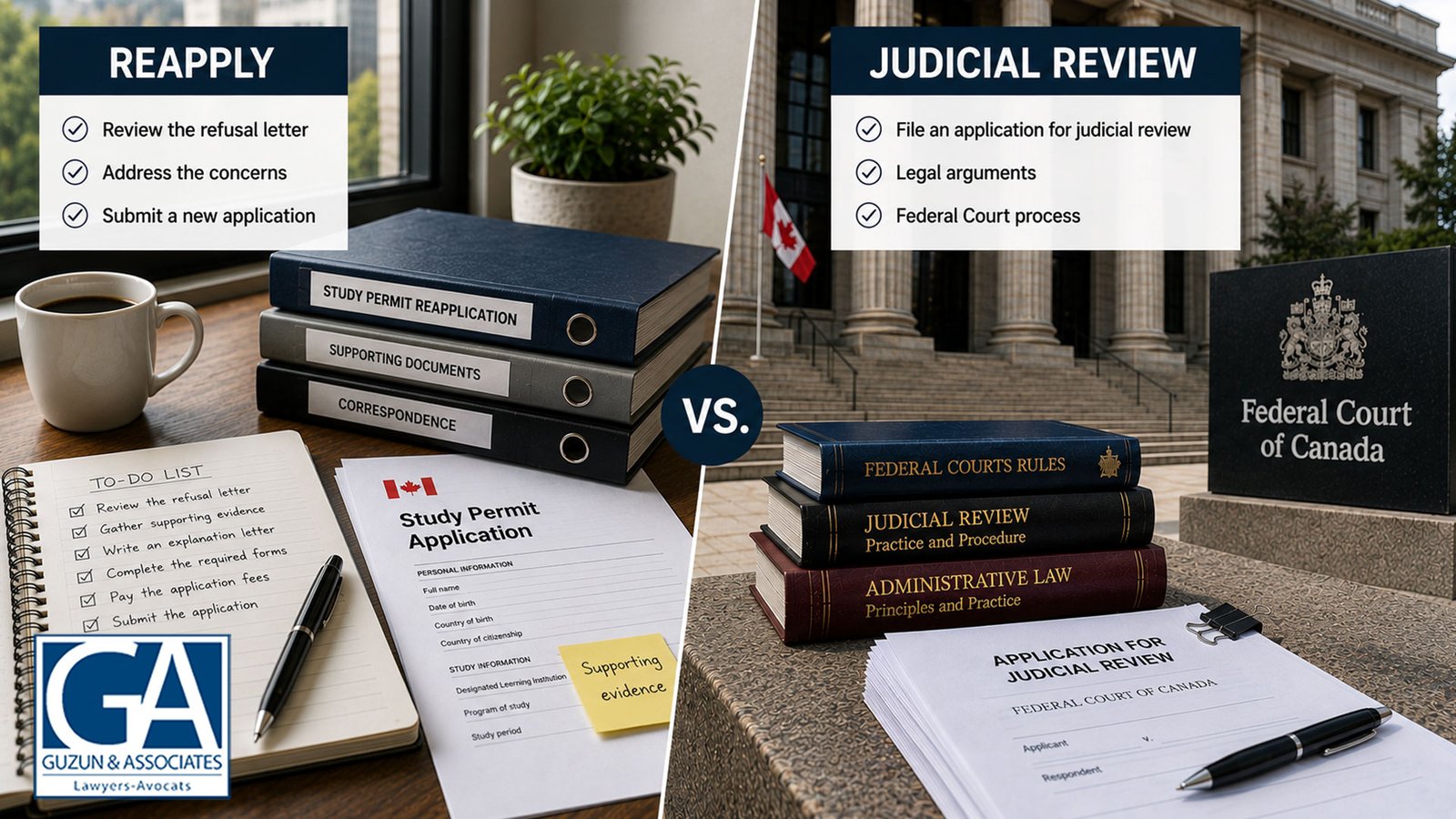
Judicial Review vs. Reapplication
Judicial review is a Federal Court process that examines whether a study permit refusal decision was reasonable, procedurally fair, and consistent with Canadian immigration law. The Federal Court does not normally issue study permits directly. If judicial review succeeds, the matter is typically returned to a different immigration officer for reconsideration.
A Federal Court challenge may be appropriate when there are concerns that the officer made a significant legal, factual, or procedural error, such as overlooked evidence, misinterpretation of documents, incorrect legal analysis, or conclusions unsupported by the application record.
When judicial review may help
Judicial review is worth considering if:
- the refusal is clearly unreasonable
- the officer overlooked key evidence
- there was a procedural fairness issue
- the file was strong but refused on illogical grounds
Strict deadlines apply to Federal Court judicial review applications. In study-permit cases, applicants outside Canada generally have 60 days to file, while applicants inside Canada generally have 15 days.
When it may not be the best first step
If the refusal stems from missing documents or weak proof, reapplying is usually faster and more practical. The Federal Court typically remands cases for redetermination rather than issuing permits directly. Study permit decisions are also commonly assessed against the regulatory requirements.
| Option | Best for | Main risk |
| Reapply | Weak evidence can be improved | Repeating the same mistakes |
| Judicial review | Serious legal or factual error | More time and legal cost |
| Both strategies with legal advice | Complex files with deadlines | Poor coordination can delay plans |
How to Reapply After a Study Permit Refusal
A reapplication should not simply repeat the refused application without addressing the officer’s concerns and strengthening the evidence. It should directly address the officer’s concerns with improved evidence, a clear strategy, and a strong justification for meeting study permit requirements.
Effective reapplications are organized and specific. They highlight changes made, clarify misunderstandings, and demonstrate how new evidence resolves previous refusal points.
How to strengthen a new application
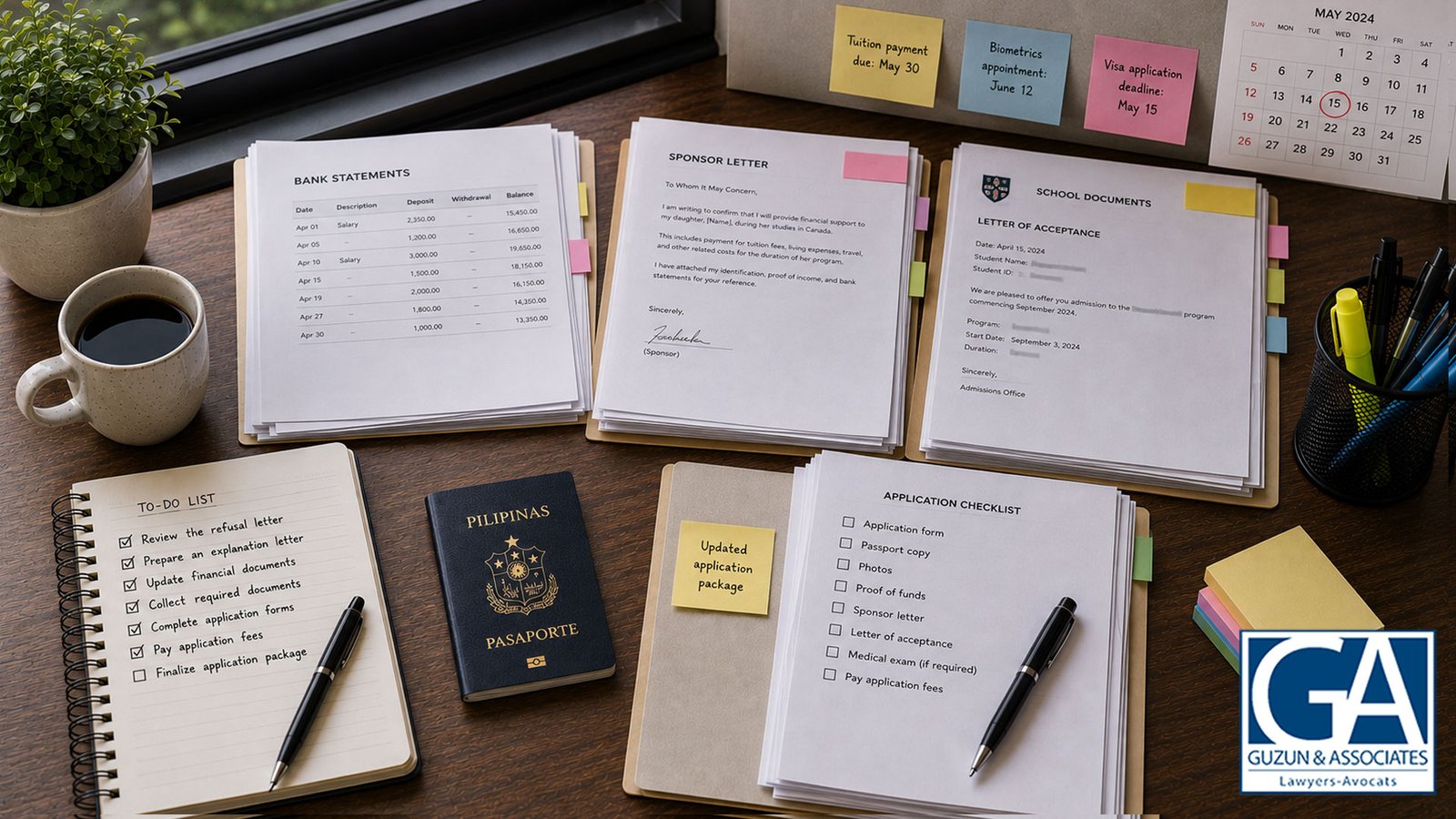
A strong reapplication may include:
- updated admission documents
- detailed tuition and living cost proof
- sponsor letters with financial records
- employment letters and family ties evidence
- a tailored statement of purpose
- an explanation of study gaps, prior refusals, or travel history
Common mistakes to avoid
Do not ignore the previous refusal or rely on generic online explanations, and do not assume that simply adding documents automatically fixes issues; instead, focus on relevance, credibility, and consistency.
Can a Study Permit Refusal Affect Future Applications?
A prior refusal does not automatically prevent future approvals. However, previous refusals remain visible to immigration officers and may influence how future applications are assessed. Consistency, credibility, and proper disclosure are therefore extremely important in any new application.
The Impact of Legal Guidance on Study Permit Refusals
Legal assistance can significantly improve outcomes after a refusal, especially with tight deadlines or complex cases. An immigration lawyer can review the refusal, assess GCMS notes, identify errors, and guide your next steps.
At Guzun & Associates Lawyers in Montreal, we help clients understand refusal reasons and determine the best course of action. We prepare reapplications, analyze officer notes, and advise on Federal Court judicial review when appropriate.
What legal guidance can do
A lawyer can:
- identify the true refusal issue
- build a focused reapplication strategy
- prepare clear legal submissions
- assess whether judicial review has merit
- help reduce the risk of repeated refusals and ongoing application concerns
Why strategy matters in 2026
Study permit cases are detailed and rigorously reviewed. A refusal can impact school enrollment, finances, family plans, and future immigration prospects. A timely, realistic, and evidence-based legal response is essential.
| Situation | Usual best next step | Legal value |
| Missing or weak proof | Reapply with a stronger record | High |
| Officer ignored key facts | Judicial review may be appropriate | Very high |
| Urgent school deadline | Fast reassessment and filing plan | High |
2 Real Cases:
Case 1: Refusal for finances and purpose of studies
A student was refused due to insufficient funds and unclear program relevance. We reviewed the case, identified weak sponsor evidence and a vague study plan. Our team prepared a stronger application with proof of fund sources, family financial records, and a detailed explanation linking the program to career goals. The student was later approved.
Case 2: Refusal with unreasonable findings
An applicant with a strong academic record received a refusal based on standard wording that did not fit their file. Our review revealed key documents were not adequately addressed. We advised on strategy, challenged the reasoning, and supported a renewed, properly documented process, leading to a positive outcome.
FAQ
1. What are the most common reasons for a Canadian student visa refusal in 2026?
Common refusal reasons include insufficient funds, weak program justification, doubts about returning home, poor documentation, and application inconsistencies.
2. Should I order GCMS notes after a study permit refusal?
Yes, GCMS notes are highly recommended. They reveal the officer’s specific concerns, aiding in a better reapplication or informing a judicial review decision.
3. Is it better to reapply or seek judicial review after a refusal?
The choice depends on the refusal reason. Weak evidence suggests reapplying. Serious legal or factual errors by the officer may warrant judicial review.
4. Can I submit a new application after being refused?
Yes. A refusal does not prevent reapplying, but the new application must directly address previous concerns with enhanced, credible evidence.
5. How can an immigration lawyer help with a study permit refusal?
A lawyer can assess the refusal, analyze GCMS notes, strengthen your reapplication, and advise on the viability of Federal Court action.
Legal Disclaimer: This article is provided for general informational and educational purposes only and does not constitute legal advice. Immigration outcomes depend on the specific facts of each case. Canadian immigration laws, IRCC policies regarding student caps, and Quebec MIFI regulations frequently change. Reading this article does not create a lawyer-client relationship. For advice specific to your study permit refusal or CAQ issues, please consult directly with a qualified Canadian immigration lawyer at Guzun & Associates.
Ready to Address Your Canada Study Permit Refusal?
Free Orientation Call:
+1 (514) 842-7414 office@avocatguzun.com
105-1 rue McGill, Suite 15B, Montreal, Quebec
Begin your journey to Canada with confidence, supported by professional legal guidance from Guzun & Associates Lawyers.