A criminal record in Canada has long-lasting consequences. It affects employment, international travel, immigration status, and family matters like custody and support. Even minor offences can have significant, enduring effects.
Fortunately, Canadian law offers avenues to seal or remove certain records. With expert legal advice, you can limit the impact, pursue a record suspension (formerly called a pardon), or challenge a conviction.
Guzun & Associates Lawyers in Montreal assists individuals facing criminal charges, managing criminal records, and navigating related immigration and family law issues. This guide clarifies how criminal records impact life in Canada and outlines removal options.
What is a Criminal Record in Canada?
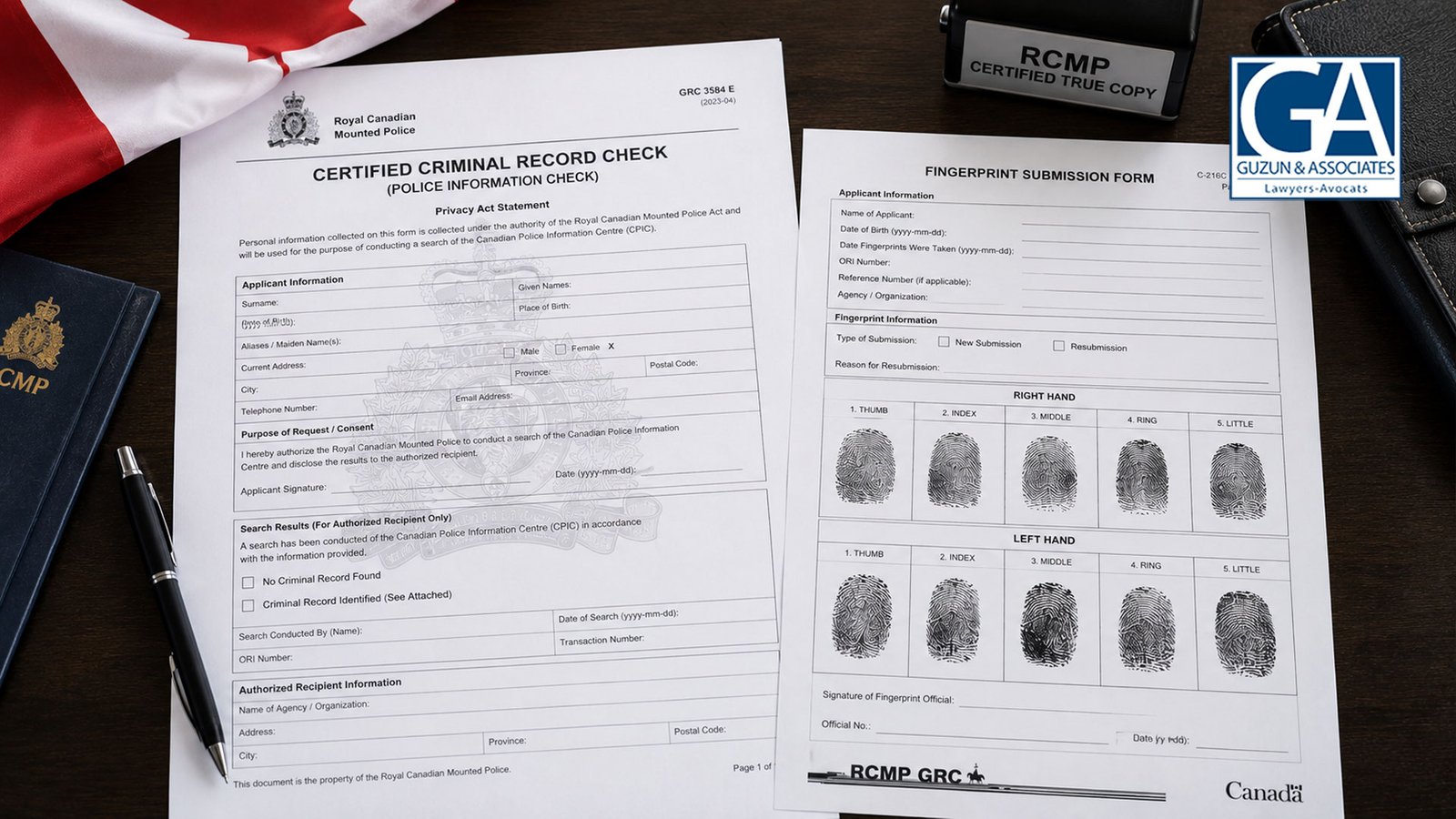
A Canadian criminal record is typically an entry in the RCMP’s Canadian Police Information Centre (CPIC). It details convictions under federal laws like the Criminal Code. Employers, schools, landlords, and immigration authorities frequently access CPIC and local police checks for screening.
Many Canadians live with a criminal record and need to understand how it affects work, travel, immigration, and family matters. Minor offences can appear, and many individuals find the record suspension process daunting. A criminal defence lawyer can assess your record and explain its present and future implications.
What Information Appears on Background Checks?
Standard criminal background checks may show convictions, certain discharges, pending charges, and sometimes peace bonds or warrants. Vulnerable sector checks are more extensive and are used for positions involving vulnerable persons, such as children or seniors.
The type of check ordered varies. This means two checks on the same person can yield different results. A lawyer can clarify what information might surface and advise on preparation for job or immigration applications.
Key Differences: Charges vs. Convictions
Being charged differs significantly from being convicted. However, non-conviction information like withdrawn charges, stayed charges, acquittals, or peace bonds can sometimes appear on specific police checks.
A conviction creates a formal criminal record. Stayed or withdrawn charges may still be visible on local police files. In some instances, police may purge or restrict non-conviction records. A criminal defence lawyer can help determine what can be removed and what requires a record suspension.
| Type of Record Issue | Who Keeps It | Possible Solutions |
| Formal conviction (CPIC) | RCMP national database | Record suspension, appeal, review |
| Non-conviction info | Local police services | Purge request, access limitation |
| Fingerprints & photos | Police and RCMP | Destruction request after case resolved |
Understanding Record Suspension (Pardon) Impact
A record suspension, previously known as a pardon, does not erase a conviction. Instead, it separates it from active criminal records in CPIC. For most routine background checks, a record suspension removes the conviction from active disclosure, although some limited-access or specialized checks can still differ.
Eligibility requires completion of all sentences, including probation, fines, and restitution. A specific waiting period must then pass, varying by offence type and date. For older or more serious convictions, current legal advice is crucial.
Eligibility for Record Suspension
Eligibility requires completing your sentence, maintaining a clear record with no new convictions, and the offence not being among excluded serious crimes. The Parole Board of Canada reviews your conduct post-conviction and any subsequent legal issues.
An incomplete or flawed application can result in refusal or significant delays. A criminal defence lawyer can assist in gathering necessary documents like court records and proof of rehabilitation, enhancing your application's success probability.
Processing Times for Record Suspensions
The entire record suspension process can take many months, potentially over a year. It involves collecting court and police records, fingerprint results, and completing extensive forms for the Parole Board. Processing times vary based on case complexity and system workload.
To mitigate delays, starting the application process upon becoming eligible is advisable. A lawyer can establish a clear timeline, prevent common errors, and liaise with authorities to ensure consistent progress.

Impact of Criminal Records on Employment Background Checks
A criminal record can severely restrict career advancement, but if you live in Quebec, you have strong legal protections. In Quebec, the Charter of Human Rights and Freedoms generally protects workers from employment discrimination based solely on a criminal record, unless the criminal record is directly related to the job or the employer can justify the requirement as job-related. Despite this law, many employers across Canada still conduct background checks for roles in finance, security, or healthcare, making it stressful to navigate job applications.
While discriminatory practices are illegal, a record can still hinder employment. Professions requiring licences, such as nursing or accounting, often have strict "good character" requirements. Consulting a lawyer before pleading guilty can safeguard future career prospects.
Criminal Records and Professional Licences
Regulatory bodies may deny, suspend, or revoke professional licences due to criminal convictions, particularly those involving fraud, violence, or impaired driving. You might be required to attend a hearing to explain the circumstances.
Facing disciplinary action without support is challenging. A lawyer specializing in criminal and administrative law can present evidence of rehabilitation, negotiate terms, and demonstrate your fitness to practice.
Explaining Your Record on Job Applications
Job applications often ask about pardoned (record-suspended) criminal records. Dishonest answers can lead to immediate rejection if the record is later discovered. Honest disclosure without guidance can also jeopardize your chances.
A lawyer can help craft a concise, truthful explanation focusing on your rehabilitation. They can also advise on the optimal timing for a record suspension application before seeking specific employment.
| Employment Issue | With Active Criminal Record | After Record Suspension |
| Standard background checks | Conviction usually appears | Conviction is sealed and not disclosed |
| Regulated professions | Licensing may be denied or restricted | Stronger chance of approval, case-by-case |
| Crossing into the U.S. | High risk of being denied entry | U.S. does not recognize Canadian record suspensions; legal advice and U.S. Waivers are key |
Immigration Consequences of a Criminal Record
For immigrants, a criminal record can pose significant challenges. It may result in inadmissibility, loss of status, denied permanent residence, or issues sponsoring family members under the Immigration and Refugee Protection Act.
Certain criminal offences can lead to inadmissibility or removal consequences depending on the offence, the sentence imposed, and how the offence is treated under immigration law. Decisions in criminal court can be used in immigration proceedings, necessitating integrated defence and immigration strategies.
Permanent Residence and Criminal Inadmissibility
Applications for permanent residence, study permits, work permits, or citizenship involve criminal history checks, both domestic and international. Some foreign convictions are assessed as if committed in Canada.
In specific situations, you might qualify for criminal rehabilitation or be deemed rehabilitated after a period. Otherwise, addressing the charge in Canada or obtaining a record suspension may be necessary. Collaborative legal counsel can provide a realistic strategy.
Sponsorship and Family Immigration with a Record
Individuals with specific violent or sexual offences may be barred from sponsoring spouses or children. Sponsored applicants with serious records can face refusal. Such decisions can lead to family separation and prolonged hardship.
Guzun & Associates Lawyers handles both immigration and criminal defence. We analyze your criminal record, immigration history, and family circumstances to develop a strategy protecting your status while addressing your record.

Family Law Issues and Criminal Records
Criminal records impact Canadian family law proceedings. In divorce, custody, and support cases, a history of violence, impaired driving with children present, or drug offences can influence judicial assessments of child safety.
A criminal conviction does not automatically forfeit parental rights but can restrict parenting time or require supervised visits. Actions taken in your criminal case can later affect your family law matters.
Domestic Violence Charges and Child Custody
Assault or threat charges between partners significantly affect custody and access orders. Courts treat family violence allegations with extreme seriousness. Even withdrawn charges or peace bonds may be considered by family courts.
Coordinated legal representation is vital. Statements made in criminal court should not prejudice your family court position. A lawyer experienced in both criminal and family law can help manage these risks and protect your relationship with your children.
Child Support, Employment, and Your Record
A criminal record that impedes employment can affect income and, consequently, child or spousal support obligations. Courts expect diligent income-earning efforts, acknowledging genuine employment barriers presented by a record.
A family law lawyer can present evidence of your job search, your record, and your earning capacity. Simultaneously, a criminal defence lawyer can work to limit or remove your record, improving your financial situation over time. Guzun & Associates offers integrated assistance.
2 Real Cases:
1. A Montreal client charged with impaired driving feared job loss and jeopardized permanent residence. Guzun & Associates challenged the traffic stop and negotiated a reduced charge. This outcome avoided jail and shortened the driving prohibition. Subsequently, he applied for and received a record suspension, retaining his job and advancing his immigration application.
2. A newcomer faced assault charges during a relationship dispute. She worried about child custody and criminal inadmissibility for immigration. Our lawyers handled both criminal and family court proceedings. We secured a non-criminal resolution for the assault charge, minimizing record impact. In family court, a safety and parenting plan led to primary custody with structured access. Her immigration prospects remained open.

FAQ
1. How long does a criminal record last in Canada?
A criminal record persists indefinitely unless a record suspension is granted or a conviction is overturned on appeal.
2. Can a criminal record be removed in Canada?
Yes. Some convictions may be eligible for a record suspension, and some non-conviction records may be restricted or purged depending on the police service and the circumstances.
3. Will a criminal record affect my immigration status in Canada?
Potentially. Certain offences can render you criminally inadmissible, endangering permanent residence or refugee status.
4. Does a criminal record automatically stop me from getting custody of my children?
No. However, the nature of the offence and the surrounding facts can significantly affect custody, parenting time, and supervised access decisions.
5. Do I need a lawyer to apply for a record suspension (pardon)?
While not legally mandatory, legal assistance is highly recommended.
Ready to Address Your Criminal Record in Canada?
Book Your Free Orientation Call:
Unsure if you are eligible for a record suspension or how your record affects your immigration status? Start with a brief, no-obligation orientation call to understand your options.
📞 Call us: +1 (514) 842-7414
✉️ Email: office@avocatguzun.com
📍 Visit: 105-1 rue McGill, Suite 15B, Montreal, Quebec
Secure your future, your career, and your family with professional legal guidance from Guzun & Associates Lawyers.
Legal Disclaimer: The information provided in this guide is for general informational and educational purposes only and does not constitute legal advice. Criminal law, record suspension eligibility, and immigration inadmissibility rules are highly complex and subject to change. The impact of a criminal record varies significantly based on the specific facts of each case. Reading this article does not create an attorney-client relationship. Please consult directly with a qualified lawyer at Guzun & Associates to evaluate your specific legal situation.