
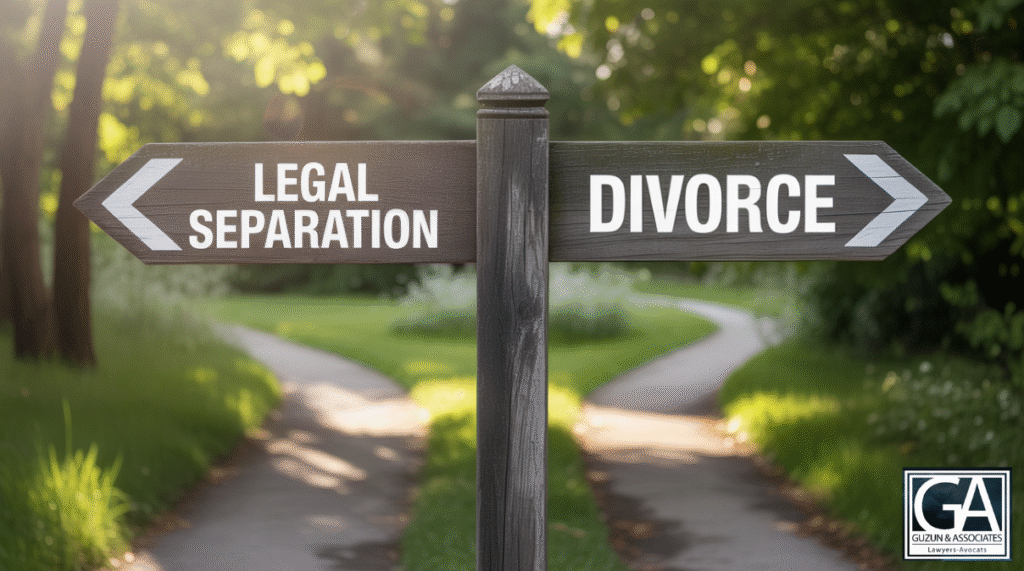
When a marriage in Quebec begins to break down, couples often face a difficult question: should they pursue legal separation or divorce? At first glance, both appear to solve the same problems — living apart, arranging custody, and dividing finances. Yet the outcomes are legally and practically very different.
Why People Confuse Legal Separation and Divorce
Many spouses see separation as a “lighter” step, believing it avoids the finality and emotional weight of divorce. Others rush into divorce because it feels more decisive, without realizing that it carries permanent consequences for inheritance, remarriage, and financial independence.
As a Montreal family lawyer, I regularly meet clients in this position of uncertainty. They come to me saying: “We want to stop living together, but do we really need to end the marriage?” This confusion is not trivial. Choosing the wrong path can affect your rights for years — from who inherits property, to whether you can remarry, to how future disputes are resolved in court.
A Real Story From My Practice
One couple I advised illustrates this problem clearly. They opted for legal separation because they felt that divorce was “too final” and went against their cultural values. The judgment gave them structure: custody schedules were respected, support payments were set, and they lived separately without daily conflict.
For several years, this arrangement worked. But when one spouse later wished to remarry, they discovered that separation had not dissolved the marriage. A divorce was still legally required. By that time, circumstances had shifted — property had changed hands, financial accounts were different, and their children’s needs had evolved. Starting a divorce process years later meant renegotiating many issues they thought were settled. The legal costs were higher, and the disputes were more intense than they would have been if the couple had chosen divorce from the outset.
What began as a practical compromise ultimately created years of legal uncertainty. This case highlights why it is critical to understand the core differences between legal separation and divorce in Quebec before making a decision that shapes your future.
Key Differences in Quebec Family Law
| Aspect | Legal Separation | Divorce |
| Marital Status | Still legally married | Marriage permanently ended |
| Remarriage | Not allowed | Allowed |
| Inheritance Rights | Spouse retains inheritance rights | Spouse loses inheritance rights |
| Custody & Support | Decided by the court | Decided by the court |
| Property Division | Family patrimony divided | Family patrimony divided |
| Grounds Required | Breakdown of cohabitation | One-year separation, adultery, or cruelty |
Who Chooses Legal Separation?
In Quebec, legal separation is not as common as divorce, but it remains the right choice for some couples in very specific circumstances. In my experience, spouses usually turn to separation when:
- Religious or cultural convictions prevent divorce. For some families, divorce is forbidden or strongly discouraged by their faith or community. Separation allows them to live apart and settle custody and financial issues, while still technically remaining married.
- There is a real possibility of reconciliation. Some couples are unsure if the breakdown of their relationship is permanent. They want the structure of a court judgment — custody schedules, support orders, division of assets — but they leave the door open for reconciliation without the need to remarry.
- Urgent clarity is required. In cases of sudden separation, where custody, housing, or support must be decided quickly, a legal separation can establish enforceable rules without waiting for the one-year period usually required before a divorce.
For these clients, separation acts as a safeguard. It gives legal structure and protection without closing the door completely. But it is important to remember that separation does not end the marriage. Rights and obligations continue, which can create complications in the future.
Who Chooses Divorce?
For many couples, divorce is the only practical solution. It is chosen when the marriage has clearly ended and there is no realistic prospect of reconciliation. In particular, divorce is pursued by spouses who:
- Seek complete financial independence. Divorce terminates inheritance rights and most spousal obligations, giving each person the ability to manage their own estate, pension, and long-term planning without interference from their ex.
- Need legal and emotional closure. Divorce eliminates the ongoing legal tie of marriage. For many, this finality is essential to move forward — emotionally, financially, and socially.
- Plan for remarriage or new long-term commitments. Only divorce restores the legal freedom to marry again or establish new family arrangements that require clear marital status.
For these individuals, divorce is not just a legal step but a necessary foundation for rebuilding their lives. It provides a definitive break that separation cannot.
Long-Term Consequences and Hidden Traps
Choosing legal separation may feel easier in the short term, but it often leaves unfinished business. Separated spouses remain legally married, meaning:
- Inheritance rights remain. Unless a divorce is finalized, a separated spouse may still have rights to inherit property or benefits.
- Future disputes are possible. If one spouse eventually wants to remarry, divorce will still be required, often under more complicated circumstances.
- Financial entanglements persist. Property, pensions, and estate planning remain more complex when the marriage itself is still intact.
By contrast, divorce delivers clarity and independence, but it also comes with challenges. Couples who rush into divorce without carefully preparing custody, support, or property arrangements may find themselves locked in costly disputes.
Lawyer’s advice: Think not only about how you feel today, but about the years ahead. Ask yourself: Do I want this arrangement to be permanent, or is it only a temporary step while I consider my options? This honest reflection can prevent expensive mistakes.
How to Make the Right Decision
Every family situation is unique. What is right for one couple may be completely wrong for another. Factors such as religious beliefs, long-term financial goals, emotional readiness, and the needs of children must all be considered before choosing separation or divorce.
At Guzun & Associates, we work with families across Montreal and Quebec to weigh these options carefully. Our role is to clarify the law, anticipate future risks, and design a strategy that protects your rights today and in the future.
📞 Call us at +1 (514) 842-7414
📧 Email us at office@avocatguzun.com
📍 Meet us at our Old Montreal office or schedule an online consultation.
Your decision today shapes not only your legal status but also your financial security and family life for years to come. Do not decide in confusion — decide with clarity and informed legal advice.